
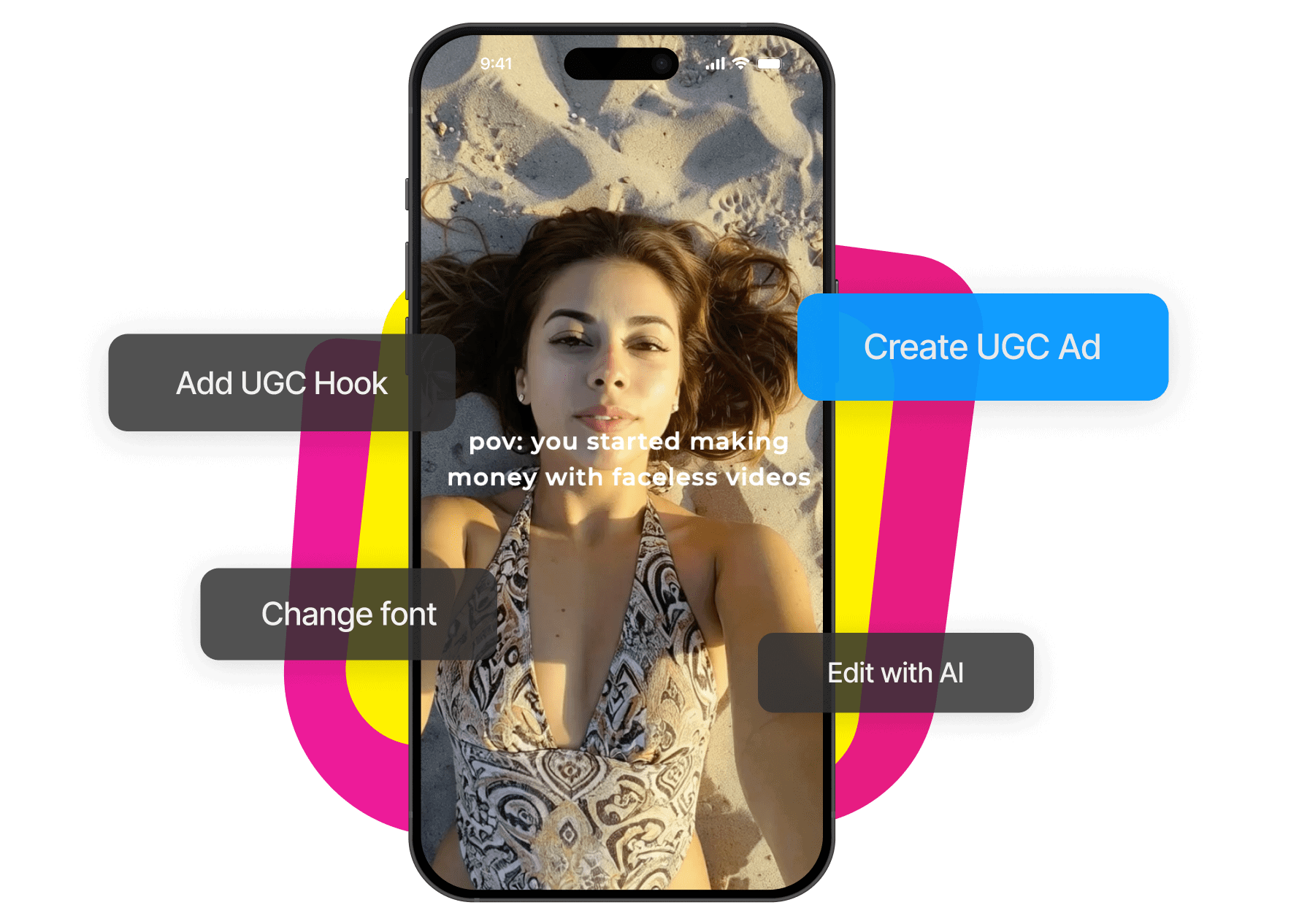


Introduction — The UGC Angle That Changed Everything
In the last 3 years, the most powerful shift in UGC advertising wasn’t a trend, a script structure, or an editing style.
It was a simple camera angle.
Not front-facing.
Not influencer-style.
Not sit-down talking videos.
The angle that changed everything was:
POV — Point of View.
The moment creators started saying:
- “POV: you finally found a shampoo that reduces hair fall…”
- “POV: you’re trying this serum for the first time…”
- “POV: your baby stops crying during bath time…”
…the performance of UGC shot through the roof.
Brands running meta ads, TikTok-style reels, YouTube shorts, and Amazon videos saw watch-time double, CTR rise, and retention curves flatten.
This wasn’t random.
POV taps deep into consumer psychology.
This blog explains why POV increases watch time by 2X, how the human brain responds, what brands should ask creators to shoot, and how UGC networks standardize POV for high-performing content.
Let’s break down the psychology, science, and ads-in-action.
1. What Is The POV Angle? (And Why It Feels So Real)
POV means:
The viewer sees what the creator sees.
Instead of watching someone talk at them, the viewer feels like they’re inside the experience.
POV creates:
- immersion
- intimacy
- personal connection
- reduced resistance
- “this could be me” sensation
In a POV shot, the viewer steps into the creator’s shoes.
Example POV angles
✔ applying face serum
✔ opening a product package
✔ pouring a drink
✔ brushing hair with a new tool
✔ shaking a supplement bottle
✔ holding a gadget in hand
✔ trying on footwear
✔ wiping a surface with a cleaning product
This transforms the video from “someone showing something” to:
“You’re trying this product yourself.”
That shift changes everything.
2. Why POV Increases Watch Time by 2X (Psychology Behind It)
The human brain loves two things:
- Familiarity
- Participation
POV combines both.
Let’s break down the psychological principles:
A. Mirror Neurons Activate (Brain Thinks It’s Doing the Action)
Mirror neurons are brain cells that fire when:
- you see someone do something
- you imagine doing something
- you’re engaged in a POV experience
In POV UGC, the viewer’s brain behaves as if they are applying the product, not the creator.
This creates deeper connection and longer watch time.
B. POV Removes the Sales Barrier
When someone speaks directly at the camera, the viewer thinks:
“This person is trying to sell me something.”
But POV eliminates the “creator face.”
There is no presenter.
No sales pitch.
Just an experience.
The brain perceives it as:
✔ natural
✔ unscripted
✔ friendly
✔ low-pressure
This reduces the mental resistance usually triggered by traditional ads.
C. POV Feels Like a Real Customer Experience
POV mimics the way people try products at home.
Example:
- how they hold a bottle
- how they test a cream
- how they pour a drink
- how they swipe on lipstick
This familiarity increases credibility.
Credibility increases trust.
Trust increases watch time.
D. POV Removes Bias & Attractiveness Pressure
In beauty/fashion content, creator attractiveness influences viewer perception.
But in POV:
The product becomes the star — not the person.
This reduces comparison-related insecurity, which is common among viewers, especially women.
E. POV Feels Like a Friend Sharing, Not an Influencer Promoting
Influencers = perfect lighting, perfect hair, perfect talking style.
POV = normal person doing a normal action.
Consumers trust “normal” more.
3. Why POV Works Across Multiple Niches (Real Case Patterns)
POV has become the strongest UGC angle in:
Skincare
Applying cleanser, toner, serum, sunscreen.
Haircare
Oil application, massaging scalp, brushing hair.
Tech
Unboxing, pressing buttons, connecting devices.
Food & Beverage
Pouring, opening, tasting POV.
Baby & Mom
Bathing baby, applying lotion, feeding moments.
Home & Cleaning
Wiping surfaces, spraying cleaners, organizing.
Grooming
Shaving POV, applying beard oil.
Fashion
Trying on shoes, zip-up POV, mirror POV.
Fitness
Mixing supplements, POV workouts.
Because POV reflects what customers already do in real life, it performs universally — across categories, geographies, and demographics.
4. The First 3 Seconds of POV (Where It Beats All Other Angles)
The hook determines everything.
POV hooks are powerful because they:
- look different
- break predictable “talking head” format
- visually surprise the viewer
- immediately show action
Examples:
Hook 1 (Skincare)
POV: You’re done wasting money on serums that don’t work.
Hook 2 (Haircare)
POV: You’re trying this hair oil for the first time.
Hook 3 (Tech)
POV: This is how the earbuds actually connect.
Hook 4 (Cleaning)
POV: Watch how fast this removes stains.
Hook 5 (Food)
POV: You open the pack and smell this…
POV hooks instantly draw the viewer in because they feel personal and immersive.
5. POV + Sound = 2× More Retention (ASMR Micro-Effects)
POV works even better when paired with natural sound:
✔ tapping
✔ pouring
✔ squeezing
✔ clicking
✔ unboxing rustle
✔ brushing
✔ zipper sound
✔ hair movement
These ASMR-like sounds capture attention subconsciously.
Brands running sound-on POV ads see:
- longer view duration
- deeper viewer engagement
- higher “listen-through rate”
- lower skip rate
6. POV Works Best With “Hands + Product” Shots
The most effective combination of POV is:
Hands + Product + Real Motion
This creates:
✔ authenticity
✔ immersion
✔ realism
✔ emotional participation
The viewer feels like their own hands are interacting with the product.
In consumer psychology, this triggers:
The Ownership Bias
People feel attached to objects they imagine touching.
POV activates this instantly.
7. Why UGC Networks Train Creators for POV (Professional Standards)
POV may look simple, but it needs consistent execution.
Trusted UGC networks in India train creators to shoot proper POV by teaching:
✔ framing
✔ camera stabilization
✔ proper lighting
✔ maintaining hand visibility
✔ using both hands correctly
✔ clean product presentation
✔ on-brand backgrounds
✔ capturing textures clearly
✔ mixing POV with over-the-shoulder shots
Networks standardize POV so the brand receives:
- consistent quality
- same angle every time
- clean product visibility
- minimal retakes
- usable footage for ads
Soft note (non-promotional):
Many reliable UGC networks today maintain their own POV playbooks so creators deliver content that meets brand standards and performs well in ads.
8. POV + Storytelling = High-Performance UGC
POV works best when combined with narrative elements:
Example 1: Problem POV
POV: “Your skin gets oily by 3 pm no matter what you try.”
Example 2: Reaction POV
POV: “You didn’t expect this shampoo to work… but look.”
Example 3: Demo POV
POV: “This is how you actually apply it for best results.”
Example 4: Before/After POV
POV: “Day 1 vs. Day 7.”
Example 5: Surprise Element POV
POV: “Wait till you see how fast this removes stains…”
When story + POV combine, performance skyrockets.
9. POV Creates Emotional Safety (The Most Underrated Benefit)
Consumers hate being “sold to.”
POV removes:
- direct selling
- performance pressure
- face-to-face awkwardness
- influencer tone
And introduces:
- calmness
- natural flow
- comfort
- “friend showing something” energy
This soft emotional environment makes people watch longer.
10. POV Works for People Who Are Camera-Shy
Not everyone is confident facing the camera.
POV gives:
✔ introverted creators
✔ shy speakers
✔ non-influencer personalities
…a way to create high-performing ads without ever showing their face.
This expands the UGC creator supply pool significantly.
11. POV Helps Brands Reach a Wider Audience (Inclusivity)
Because POV focuses on hands & product rather than faces:
- no skin tone bias
- no attractiveness bias
- no gender bias
- no age bias
- no appearance judgment
It becomes universally relatable.
12. POV Helps Reduce Ad Fatigue
When brands repeatedly use talking-head UGC, viewers stop engaging.
POV breaks monotony.
By mixing:
- creator faces
- hands-only POV
- hybrid POV
- voiceover POV
- silent product POV
Brands extend creative lifespan and reduce fatigue.
13. POV = High ROI Because It’s Low-Cost + High-Impact
POV content requires:
✔ no studio
✔ no makeup
✔ no fancy equipment
✔ no complex lighting
✔ minimal editing
Yet it produces:
✔ high watch time
✔ high retention
✔ strong emotional connection
✔ higher conversions
Low production → high output = best ROI for D2C brands.
14. Soft Industry Note (Non-Promotional)
Many trusted UGC ecosystems and creator networks in India now include POV-based templates and training modules to help creators produce consistent POV content. These networks help brands maintain creative reliability and reduce performance risk by ensuring creators follow proven POV structures.
Conclusion — POV Is Not Just a Trend; It’s a Psychological Shortcut to Trust
POV works for ONE reason:
It makes the viewer feel like the product is already in their hands.
This psychological immersion:
- increases watch time by 2X
- improves emotional connection
- reduces skepticism
- boosts purchase intent
- lowers CAC
- increases ROAS
- performs well across any platform
POV is not about shooting style.
It’s about how the viewer feels while watching.
In a world filled with polished influencer ads, POV is the creative angle that feels honest, direct, real, and trustworthy.
And in the UGC industry, trust = performance.